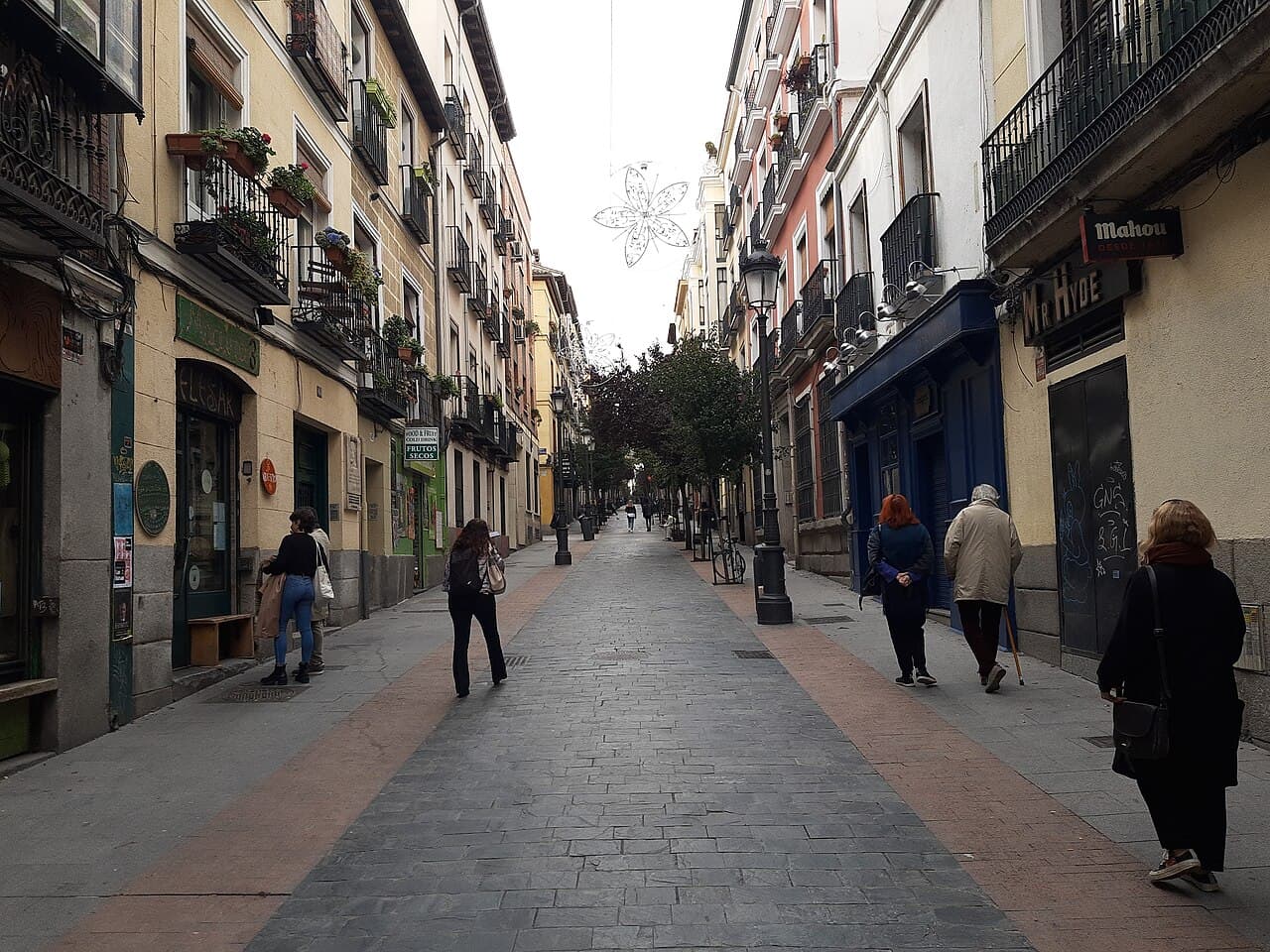
Quick snapshot
Best for a walking routine built around museums and restaurants; check bar noise and daylight before signing.
- Rent
- €€€€
- Typical rent
- Compare current listings
- Noise
- High
- Safety (editorial)
- High
- Green space
- Medium
Rent & Cost of Living
Typical asking rent range: Compare current listings, varies by size, condition, and contract type. This edition's indicative per-square-metre estimate is not quoted in this edition.
Rent ranges are dated editorial planning estimates, not current market quotations. Compare live listings and the exact flat. Atmosphere and safety ratings are editorial judgments, not statistical crime rankings.
A bit of history
Barrio de las Letras takes its identity from Madrid's Golden Age writers. Cervantes, Lope de Vega, Quevedo, and other major literary figures lived or worked in this part of the city, and the street names still carry that history. The neighborhood sits between the old center and the Prado axis, which explains its mix of literary heritage, political institutions, museums, hotels, restaurants, and visitor traffic.
The Vibe
Historic, literary, polished-but-lived-in, restaurant-led, central. Excellent central access: Sol, Sevilla, Anton Martin, Banco de España, Atocha, and the Prado corridor are all usable depending on the exact street.
Barrio de las Letras puts museums, restaurants and central walking routes close together. Around Huertas and Plaza Santa Ana, that convenience comes with busy terraces and late bar traffic; the Congreso and Prado edges offer a different daily routine.
Older flats vary sharply in light, lifts and insulation. An interior-facing flat may reduce street noise but lose daylight or ventilation. Visit at the time you expect to be home and compare the actual windows and layout.
Who It’s For
- Culture-focused newcomers
- Couples
- Food lovers
- Short-to-medium central stays
Who Should Avoid It
- You need quiet weekends
- You want a large modern flat
- You dislike tourist foot traffic
- You want easy parking
Best Sub-Areas
Highlights
- Prado, Thyssen-Bornemisza, CaixaForum, and the Paseo del Arte nearby
- Calle Huertas and Plaza Santa Ana for restaurants and evening plans
- Walkable to Sol, Atocha, Retiro, Lavapies, and La Latina
- Strong cafe, tapas, and wine-bar density
- Literary street names and historic plaques across the neighborhood
Pros and Cons
Pros
- One of Madrid's best culture-and-food locations
- Very walkable for central work, museums, restaurants, and train access
- Museum and restaurant access within a compact central area
- Useful for short stays while learning the city
- Easy to host visitors without crossing Madrid
Cons
- Noise can be serious around Huertas, Plaza Santa Ana, and bar streets
- Older buildings may mean stairs, weak insulation, poor light, or small layouts
- Tourist and hotel pressure shape daily life
- Expensive for the amount of space you get
- Not the easiest place for families, cars, or calm routines
Compared With Other Neighborhoods
- Compare the Huertas bar streets with Sol’s shopping and transport routes
- More restaurant-led and visitor-facing than Chamberi
- Compare the exact building and street with nearby Lavapiés
- Older central streets offer a different layout from Salamanca’s wider grid
Bottom Line
Choose the area if walking to culture and dinner matters more than space or parking. Compare the route to Antón Martín, Sol or Atocha from the address rather than treating all of Las Letras as equally close to each station.
Location
The previous edition’s unsupported numerical rent estimates have been removed. Compare current listings for the size, condition and street you need. Safety labels express editorial judgment, not a statistical crime ranking.
Spotted an outdated detail? Send the desk a correction.